ambient one — air quality monitor
We built an air quality tracker because we couldn't trust the cheap ones — here's the data.
Measures PM2.5, PM1.0, PM10, CO₂, VOCs, NOx, temperature and humidity in real-time. Swiss Sensirion sensors. Open MQTT. Works with Home Assistant out of the box.
10% discount applied automatically at checkout

Real readings, not demo data
Actual logged measurements from ambient one units in a home office, a workshop, and a small studio. All readings exportable via CSV.
Without monitoring, you'd have no idea. Dust settled but PM2.5 stayed elevated for 40 min after stopping.
Opening a window for 10 minutes dropped CO₂ below 800 ppm. Without a monitor, most people never realise the air degrades this much during a normal workday.
This is why we built it. Without monitoring, you'd have no idea. Dust settled but PM2.5 stayed elevated for 40 min after stopping.
Formaldehyde and other VOCs in flat-pack furniture are well documented. The data confirmed when it was actually safe to sleep in the room.
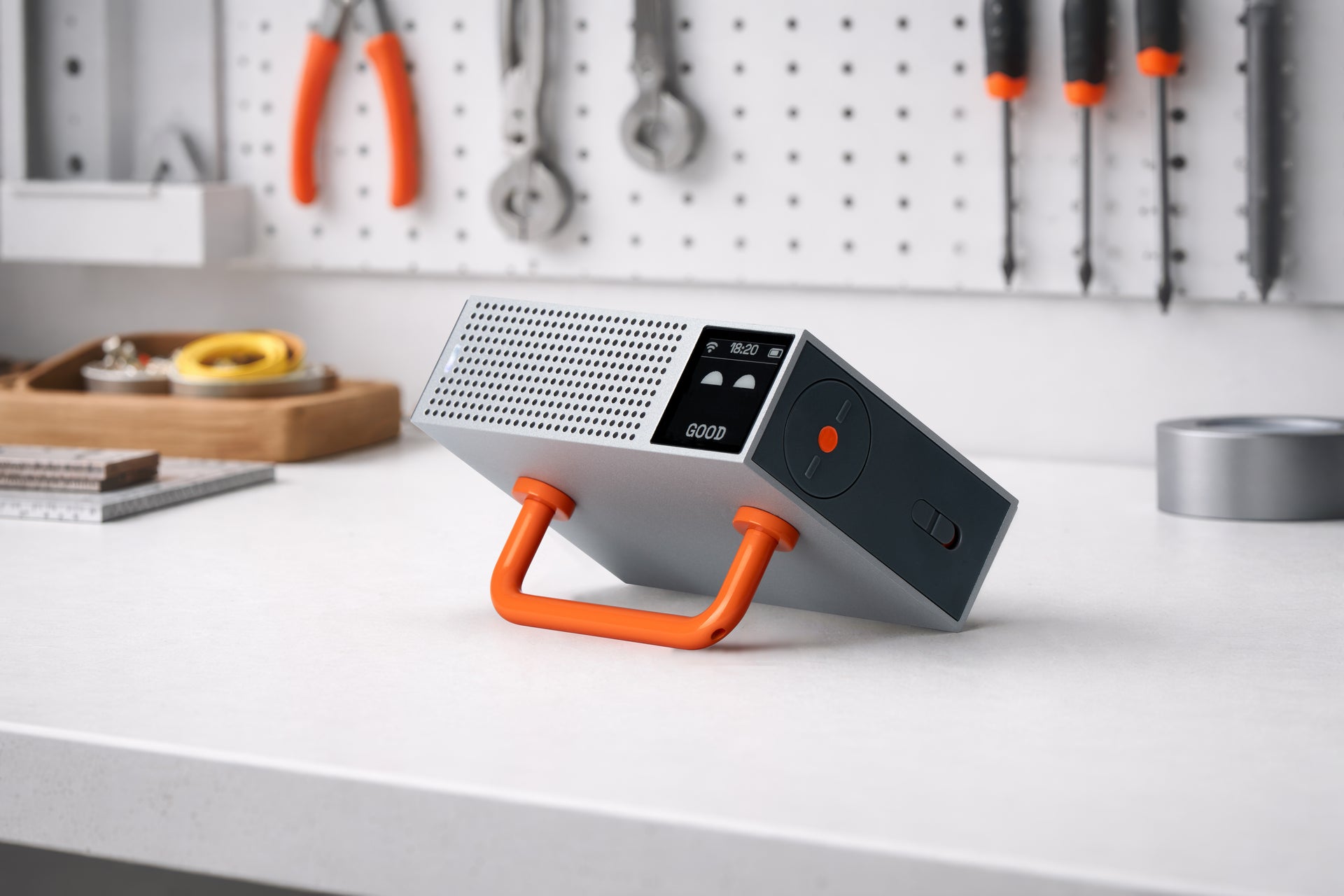
What it actually measures
Sensor specs, not marketing copy. The Sensirion SEN66 module — the same sensor family used in commercial building management systems.
| Sensor | What it detects | Range | Accuracy |
|---|---|---|---|
| PM1.0 / PM2.5 / PM4.0 / PM10 | Fine particles — dust, smoke, pollen, combustion particles | 0–1,000 µg/m³ | ±10 µg/m³ or ±10% |
| CO₂ | Carbon dioxide — ventilation quality indicator | 400–5,000 ppm | ±40 ppm ±5% |
| VOCs (index) | Volatile organic compounds — paints, solvents, cleaning products, new furniture | Index 1–500 | ±15% typical |
| NOx (index) | Nitrogen oxides — gas stoves, traffic, combustion | Index 1–500 | ±15% typical |
| Temperature | Ambient temperature | –10°C to 60°C | ±0.5°C |
| Humidity | Relative humidity | 0–100% | ±4.5% RH |
VOC and NOx are reported as indices (1–500 scale), not absolute ppb, because the Sensirion MOS sensor requires baseline calibration over time — the raw ppb values before calibration would be misleading. The index is reliable from day one. Full datasheet: sensirion.com/SEN66
Honest comparison
Where competitors beat us, we say so.
| Feature | ambient one | Awair Element | IKEA ALPSTUGA | Atmotube Pro |
|---|---|---|---|---|
| Battery powered | ✓ | ✗ | ✗ | ✓ |
| PM2.5 | ✓ | ✓ | ✓ | ✓ |
| CO₂ | ✓ | ✓ | ✓ | ✗ |
| VOCs | ✓ | ✓ | ✗ | ✓ |
| NOx | ✓ | ✗ | ✗ | ✗ |
| Modular | ✓ | ✗ | ✗ | ✗ |
| Open MQTT / local API | ✓ free | Paid tier | ✗ | ✗ |
| Home Assistant auto-discovery | ✓ 12 sensors | ✗ | ✗ | ✗ |
| Data export | ✓ | ✓ | ✗ | ✓ |
| Offline (no cloud required) | ✓ | ✗ | ✗ | ✗ |
| Price | £199 | ~£230 | ~£29 | ~£120 |
Honest notes:
- Atmotube Pro (~£120): Goes with you. If you want personal exposure monitoring while commuting or outdoors, Atmotube wins — ambient one is a room monitor, not a wearable.
- Awair Element (~£230): Established brand with 5+ years of firmware updates. If you're risk-averse about buying from a newer company, that's a fair concern.
From the founders
We're Giulio and Yuki. Yuki came from MIT where she was working on environmental sensing research. I came from SAM Labs, an IoT startup. We built ambient one because we kept finding ourselves in workshops, studios, and flats with genuinely bad air — and had no reliable way to know it. Cheap monitors contradicted each other. Good ones locked your data behind a paywall.
One thing I felt strongly about from the start: I didn't want the sensor hidden behind furniture. Most monitors are tucked away on a shelf or sit on a windowsill. ambient one is designed to be out in the open — the e-ink display shows your readings at a glance, without needing to open an app. That design decision shaped everything else.
Batch 1 shipped to 433 Kickstarter backers. Their feedback directly shaped Batch 2. You can reach us at hello@ambientworks.io.
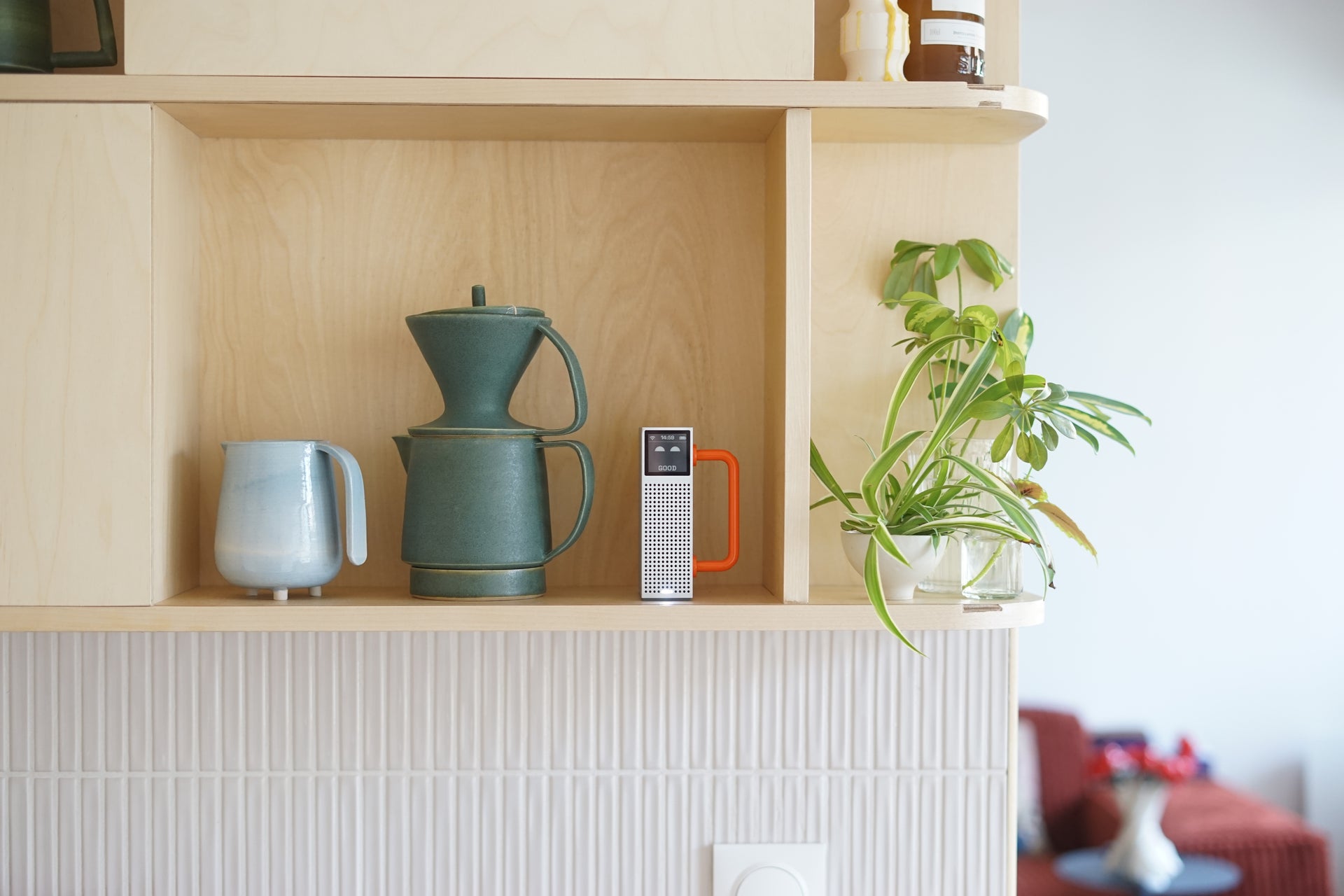
Specs and price — no asterisks
| Sensors | PM1.0 / PM2.5 / PM4.0 / PM10, CO₂, VOC index, NOx index, Temp, Humidity |
| Sensor module | Sensirion SEN66 |
| Display | E-ink, 1.59″ |
| Connectivity | Wi-Fi 2.4GHz, Bluetooth LE |
| Battery | 3,500 mAh Li-Po |
| Charging | USB-C, 5V/1A |
| Protocols | MQTT (local), REST API, BLE |
| Home Assistant | Auto-discovery, 12 entities, no cloud |
| Dimensions | 75 × 75 × 35 mm |
| Weight | ~180 g |
| Made in | Designed in London, assembled in China |
Batch 2 pre-order price
£199 was £249
Batch 2 is limited by our production run — we'll update availability as it changes.
Ships June 2026 · Designed in London, assembled in China
Pre-order ambient one10% discount applied automatically at checkout
433 Kickstarter backers · $117,443 raised · View campaign →
The questions Reddit always asks
Is this just a rebranded Chinese AQI module?
Why not just buy the IKEA ALPSTUGA?
Is the data exportable? Can I use it in Grafana / InfluxDB?
Is the firmware open source?
Open API — what does that actually mean?
You're a small company. What if you disappear?
Where does it ship from? How long does shipping take?
433 Kickstarter backers · $117,443 raised · View campaign →
Pre-order — Batch 2, ships June 2026
Pre-order ambient one — £19910% discount applied automatically at checkout
Questions? hello@ambientworks.io